



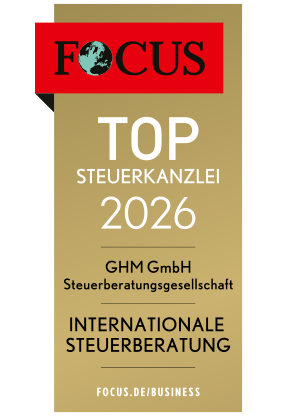
We are distinguished
(accolades):
2025 / 2026

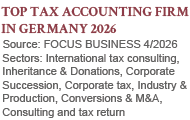
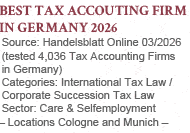
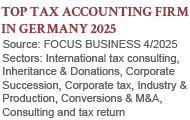
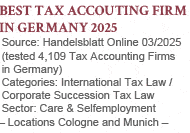
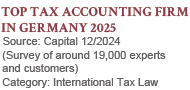
More accolades
























Introduction of the Mandatory E-Invoice and its Effects
Dear clients,
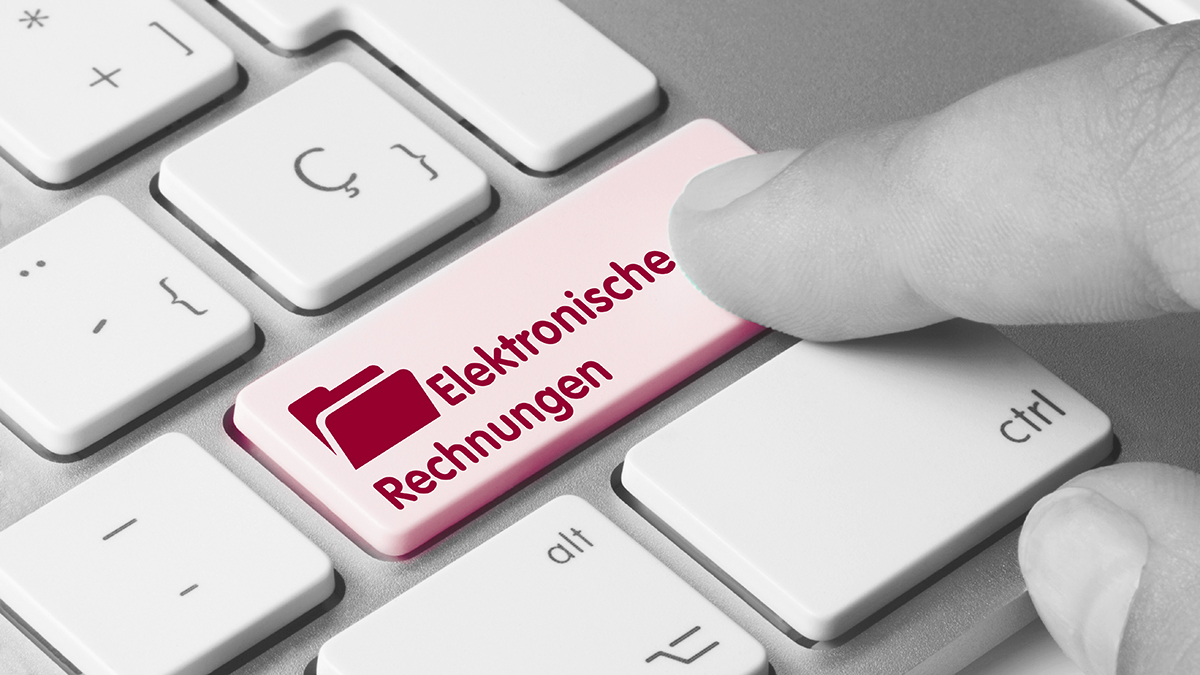
We would like to inform you about a significant innovation that will affect companies in Germany in the coming months: the mandatory introduction of e-invoices in the B2B sector. This regulation brings far-reaching changes to invoicing and affects all companies that issue invoices to business customers within the EU.
From January 1, 2025, companies must be able to receive invoices in electronic form. The sending of PDF or paper invoices is then only permitted with the express consent of the invoice recipient. This does not apply if the invoice recipients are private individuals.
Background of the New Regulation
The e-invoice is being introduced gradually to digitalize and make the invoicing process more efficient. The aim is to increase the transparency and traceability of transactions and to curb tax fraud. The changeover affects all companies that are regarded as entrepreneurs under the German VAT Act. This means that you are also an entrepreneur for VAT purposes if you are a landlord of real estate.
What is an E-Invoice?
An e-invoice is an electronic invoice that is created and transmitted in a structured, machine-readable format (= XML file). A simple PDF document without structured data does not meet this requirement and is therefore not considered an e-invoice within the meaning of the new regulations.
What Does that Mean for You?
- Changeover of accounting processes: Invoices must be created in a prescribed format and transmitted digitally. Companies may need to adapt or update their accounting software to meet the new requirements.
- Adaptation of internal systems: To ensure that all invoices are sent in the correct format, it may be necessary to adapt your ERP or financial systems.
- Costs and resources: The switch to e-invoicing can lead to additional costs for software updates, IT services or training. It is important to take this into account when planning your resources.
- Deadlines and sanctions: It is crucial to comply with the statutory deadlines in order to avoid fines and other sanctions. A violation of the regulations can lead to severe penalties. In addition, recipients who are entrepreneurs may not be able to claim input tax deduction.
Important Additions to the E-Invoice Obligation:
The obligation to issue e-invoices does not apply to invoices with amounts under €250. Tickets are also excluded from the regulation.
To ensure that you can receive and manage e-invoices in a legally compliant manner, we recommend that you set up a separate e-mail inbox. This inbox should be named as creatively and uniquely as possible to reduce the risk of spam and phishing (avoid general names such as “E-Rechnungen@…”).
The e-invoices received must be stored in an audit-proof manner so that they comply with the legal requirements.
Please note that this switch to the e-invoice obligation will take place gradually in the coming years. We therefore recommend that you take measures at an early stage and prepare for this development.
DATEV’s software solutions support you in the changeover and make the processes simpler and more efficient. Further details on the costs can be found in the attached overview.
Important Note for Invoices from GHM-Steuerkanzlei
We too will in future only send invoices in the e-invoice format. Please ensure that you are technically prepared to receive and process our invoices in the prescribed format.
So that you can receive our e-invoices as early as 2025, please let us know as soon as possible the e-mail address of your e-mail inbox that you have designated for receiving e-invoices.
If you have any questions about the implementation or require support, please do not hesitate to contact us.
Best regards
Dr. Peter Happe
Tax advisor